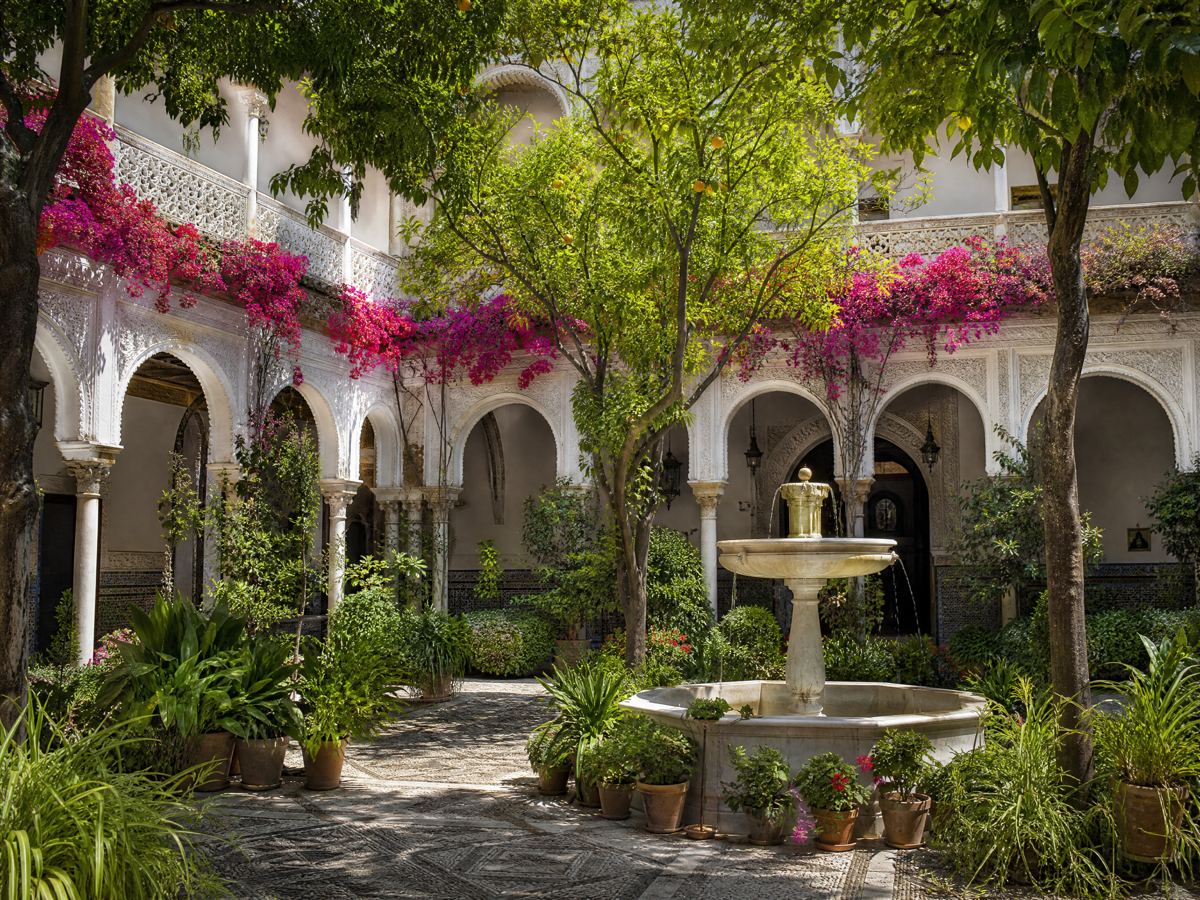
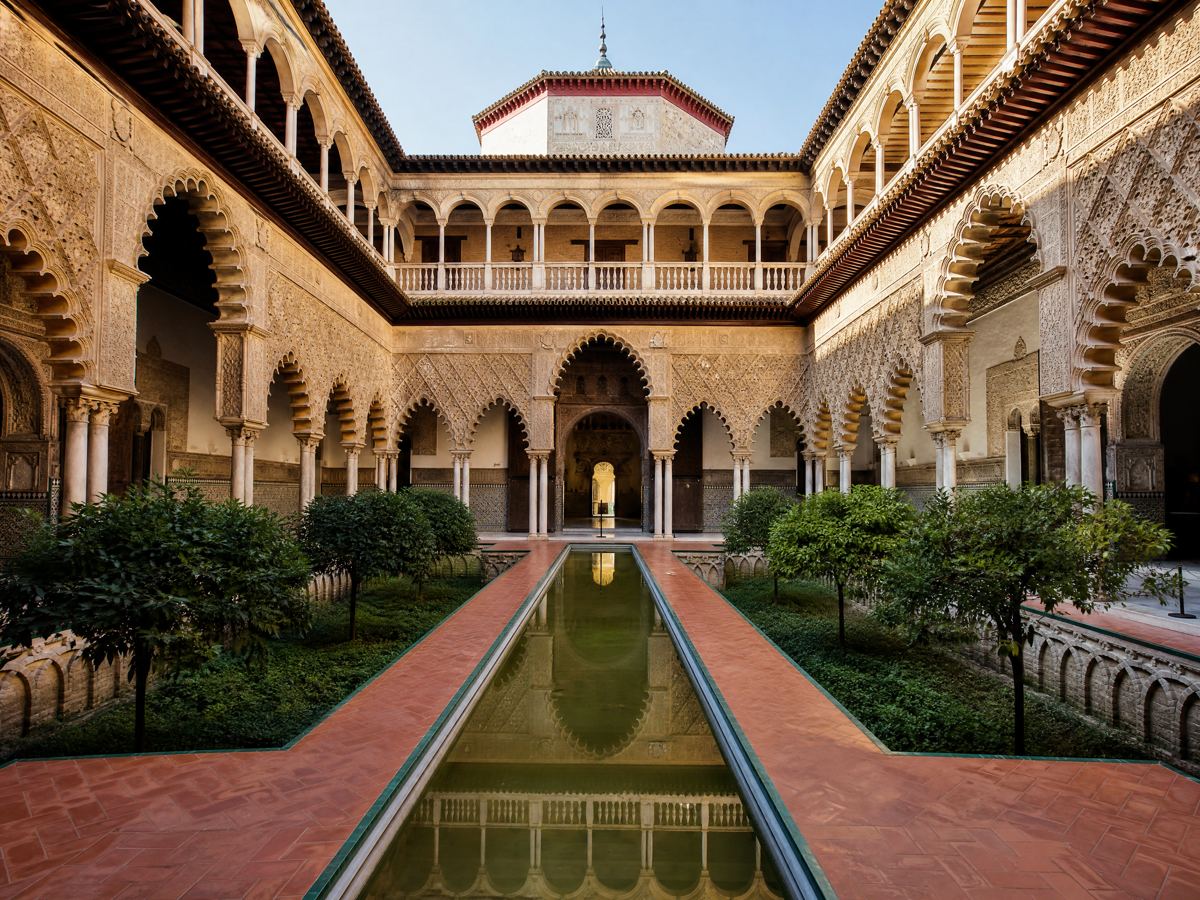
"Angela, our guide, showed us two palaces that are totally different but absolutely must-sees. She shared a plethora of details and brought to life the character of the women who owned and created the palaces."
Seville, Spain · Calle Cuna, 8
A noble house on Calle Cuna paved with 580 m² of Roman mosaics from Itálica. A rarely crowded palace, free on Friday mornings.
The Palacio de la Condesa de Lebrija is a noble house in the old centre of Seville, first recorded in the 15th century and rebuilt in the 16th. In 1901 it was bought by Regla Manjón Mergelina, Countess of Lebrija, who turned it into a home for her collection of Roman antiquities. Her descendants still own it and opened it to the public in 1999.
What you come for is underfoot. Almost the whole ground floor is paved with Roman mosaics, most of them brought from Itálica, the Roman city just outside Seville. Around them are Greco-Roman busts, amphorae, columns, Persian and Chinese ceramics, and Sevillian tiles rescued from demolished convents.
It is a small palace. You can see the ground floor in 40 minutes and the guided upper floor in another 30. That is the point: it is close, quick, and quiet, three things the Alcázar is not.
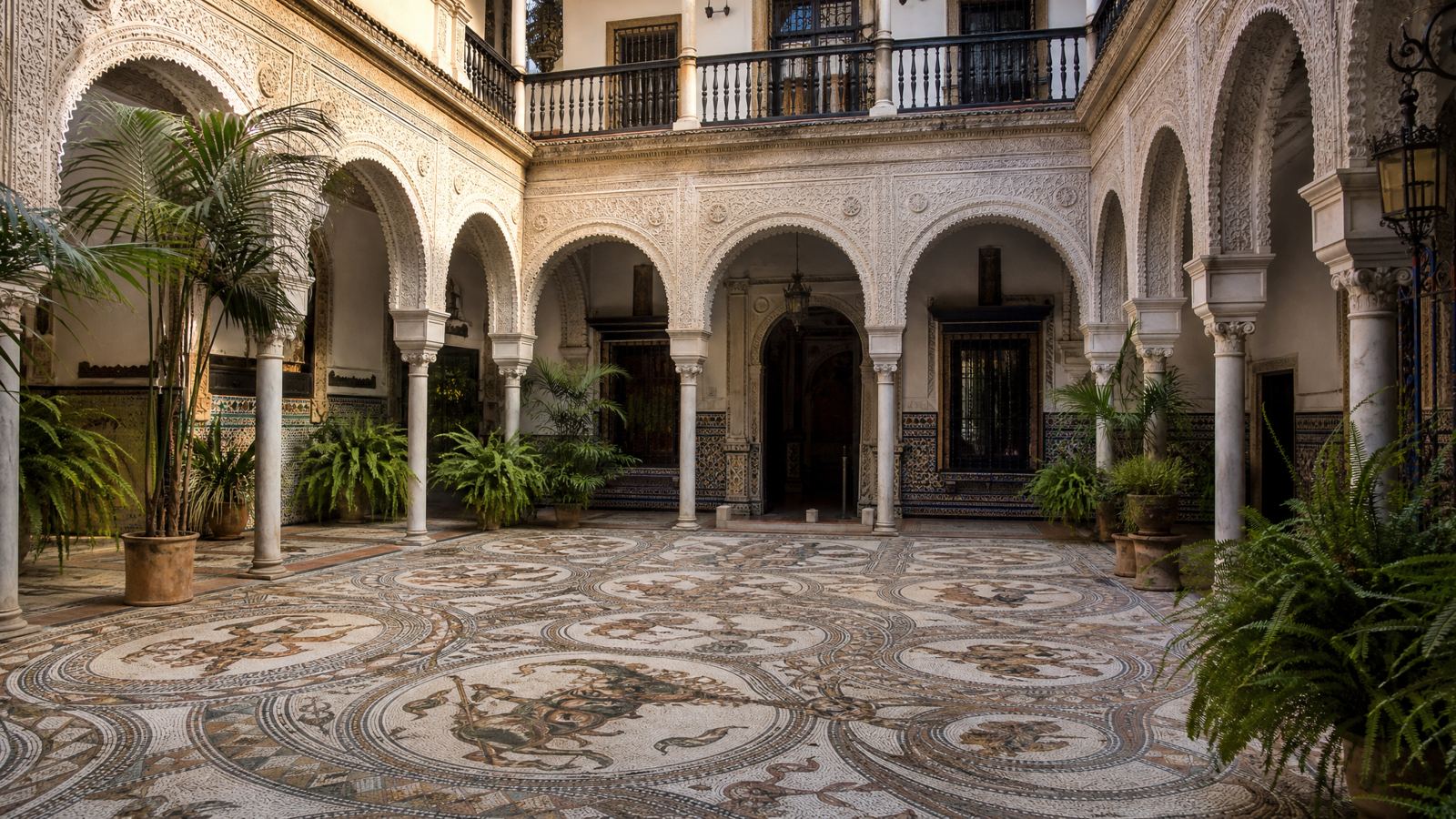
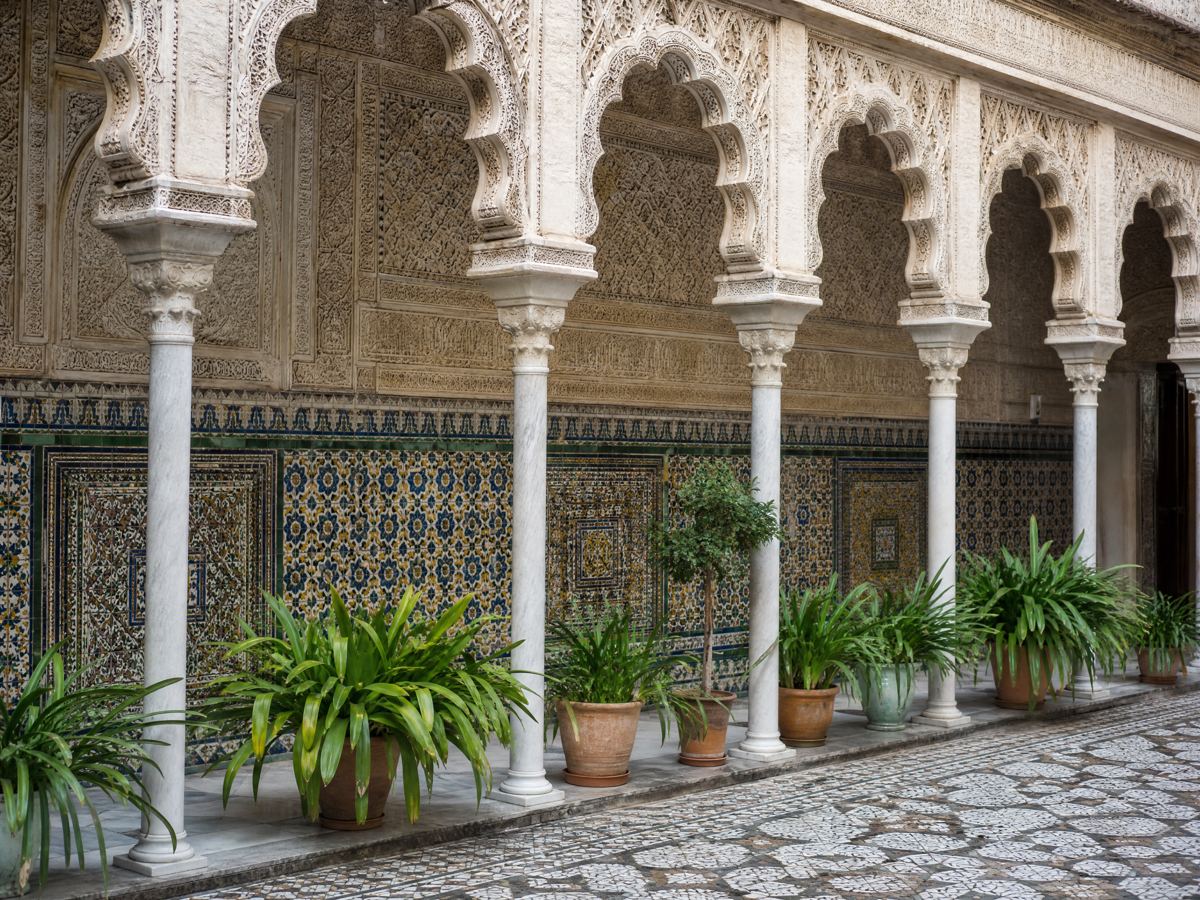
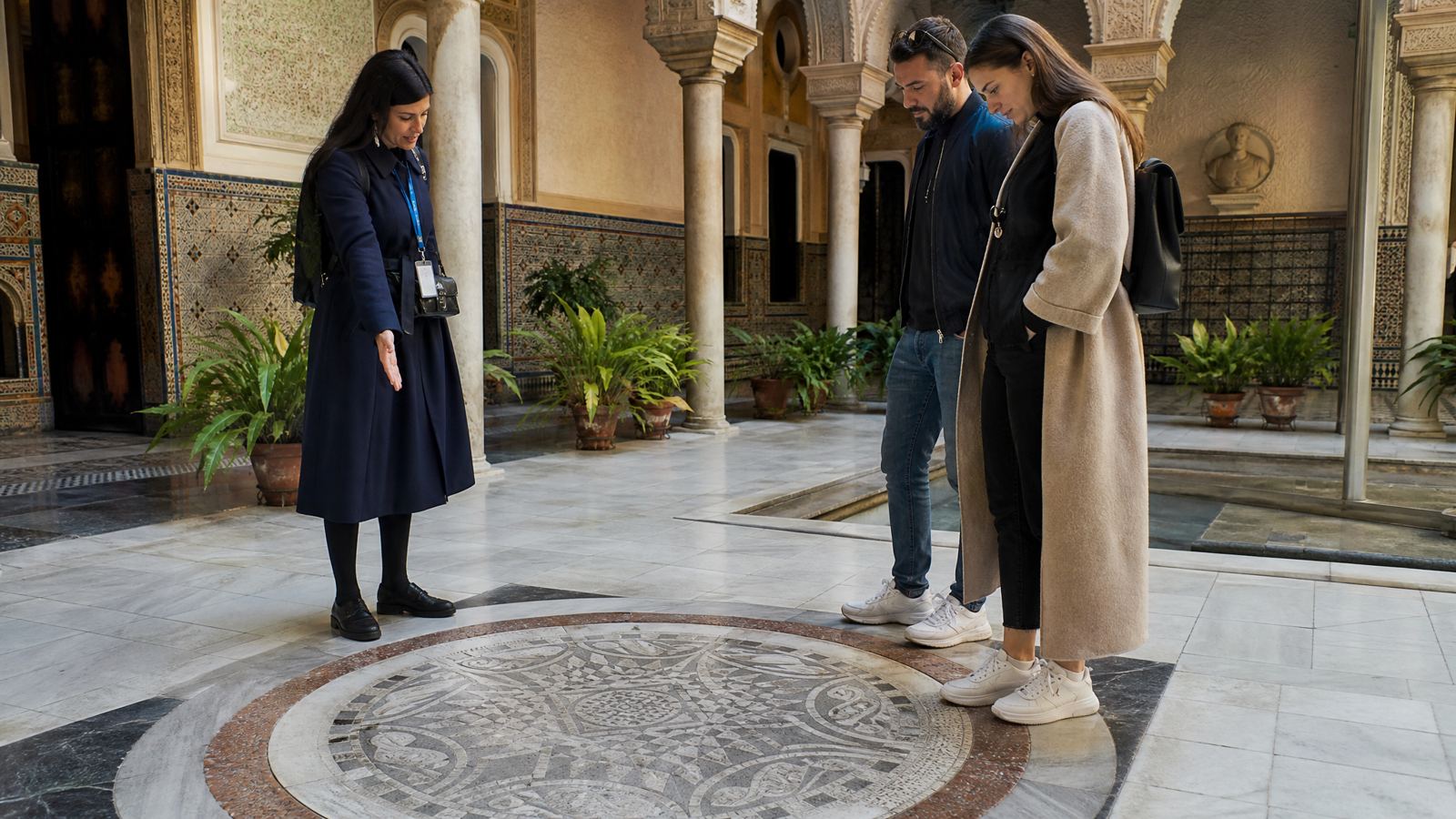
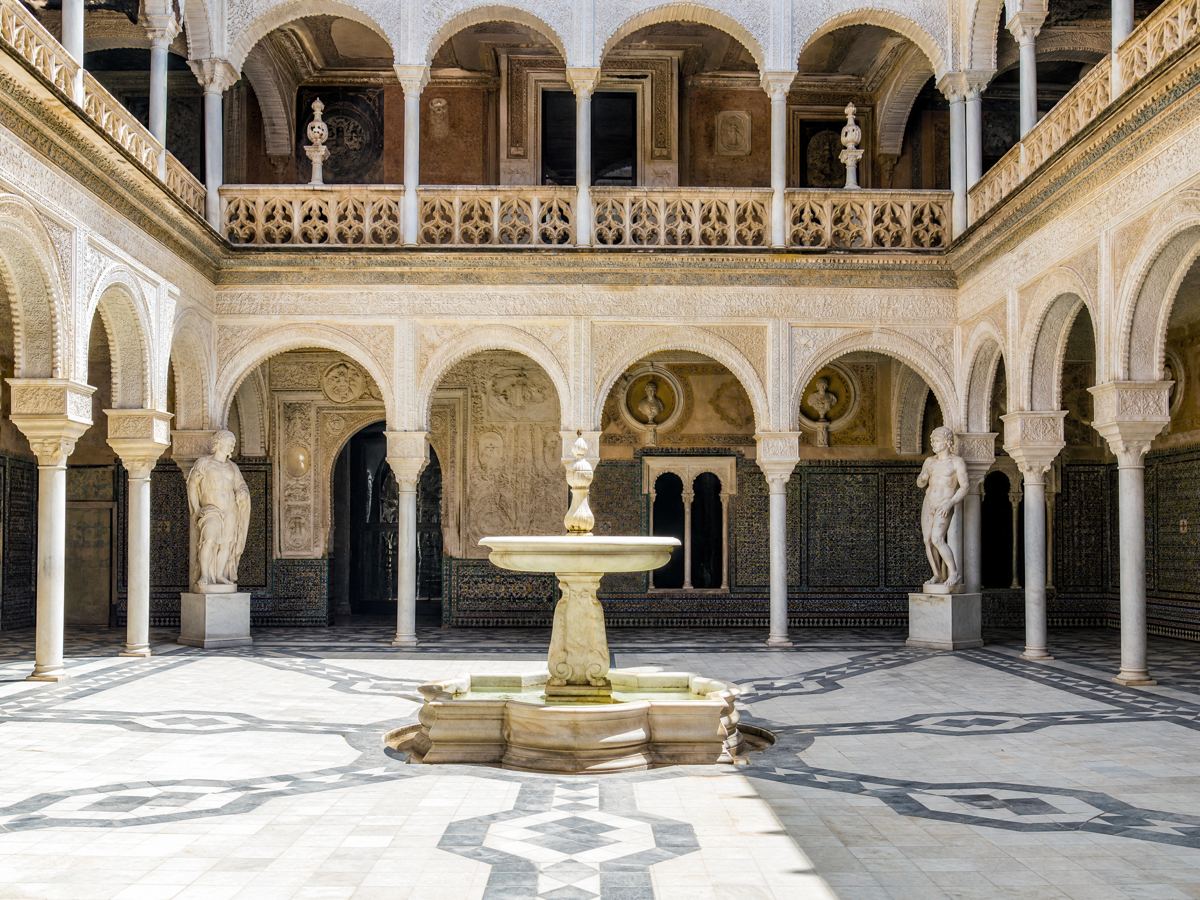
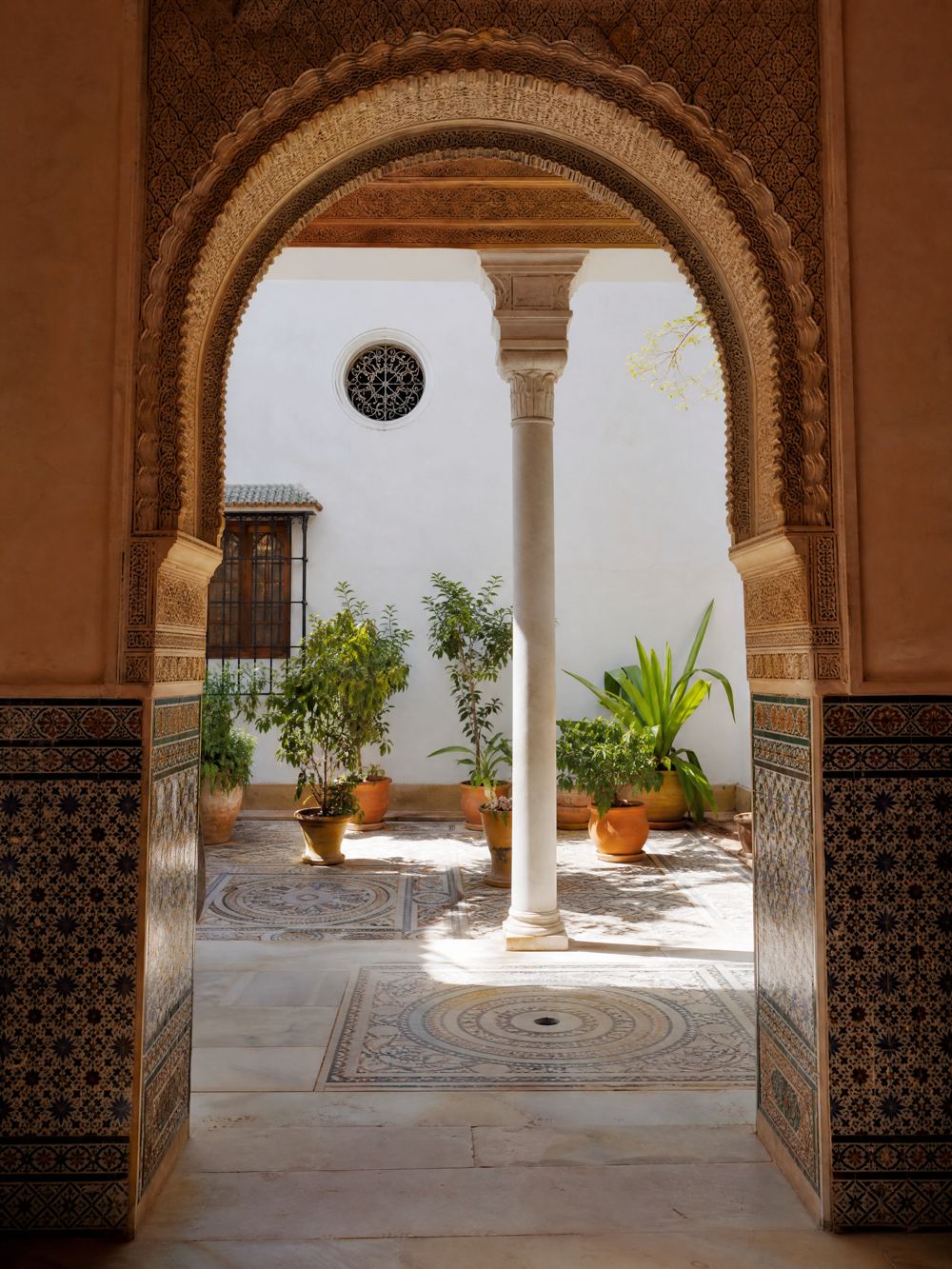
Marble columns, arches carved with plasterwork, tile dados, and underfoot a single large Roman mosaic that fills the patio. You walk around it on a narrow border. Most people spend their first ten minutes here without moving much.
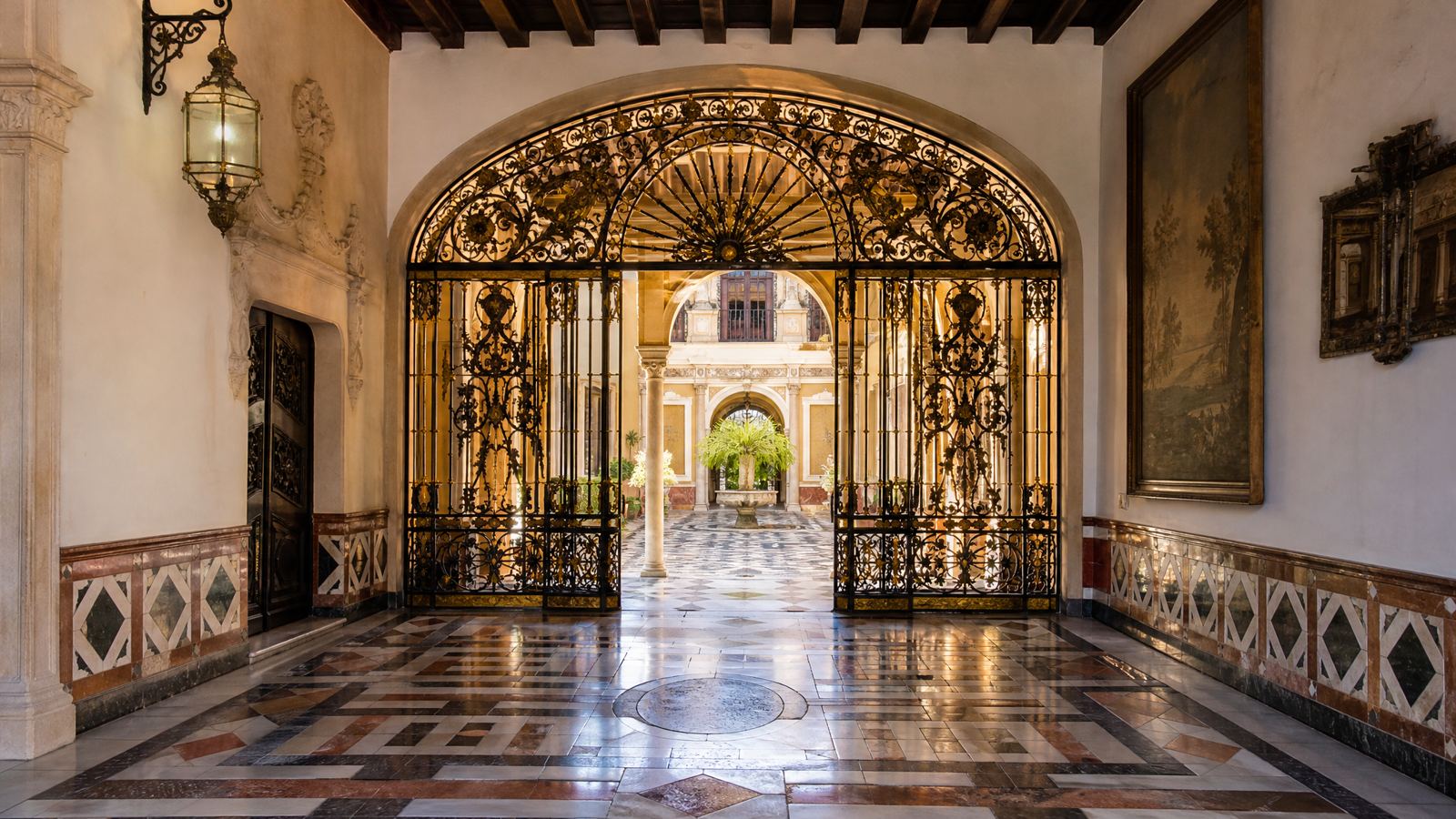
Before you even pay, look down. The hallway behind the street door is paved in opus sectile, cut pieces of coloured Roman marble fitted into geometric patterns. A gilded iron screen separates it from the patio.
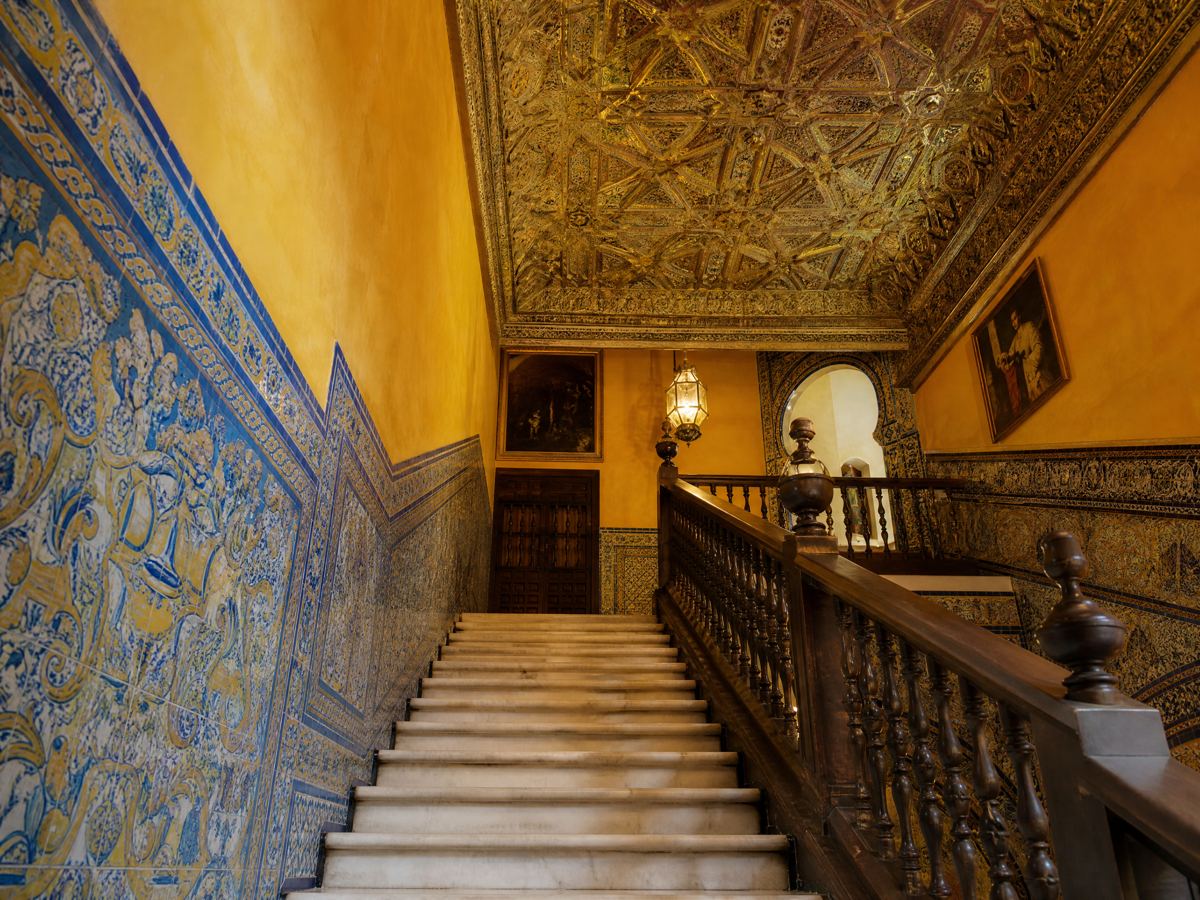
Hand-painted 16th-century Sevillian tiles climb the walls, and above them sits a gilded wooden ceiling with eight-pointed stars, the Mudéjar pattern you also see in the Alcázar. This is where the upper-floor guided visit starts.
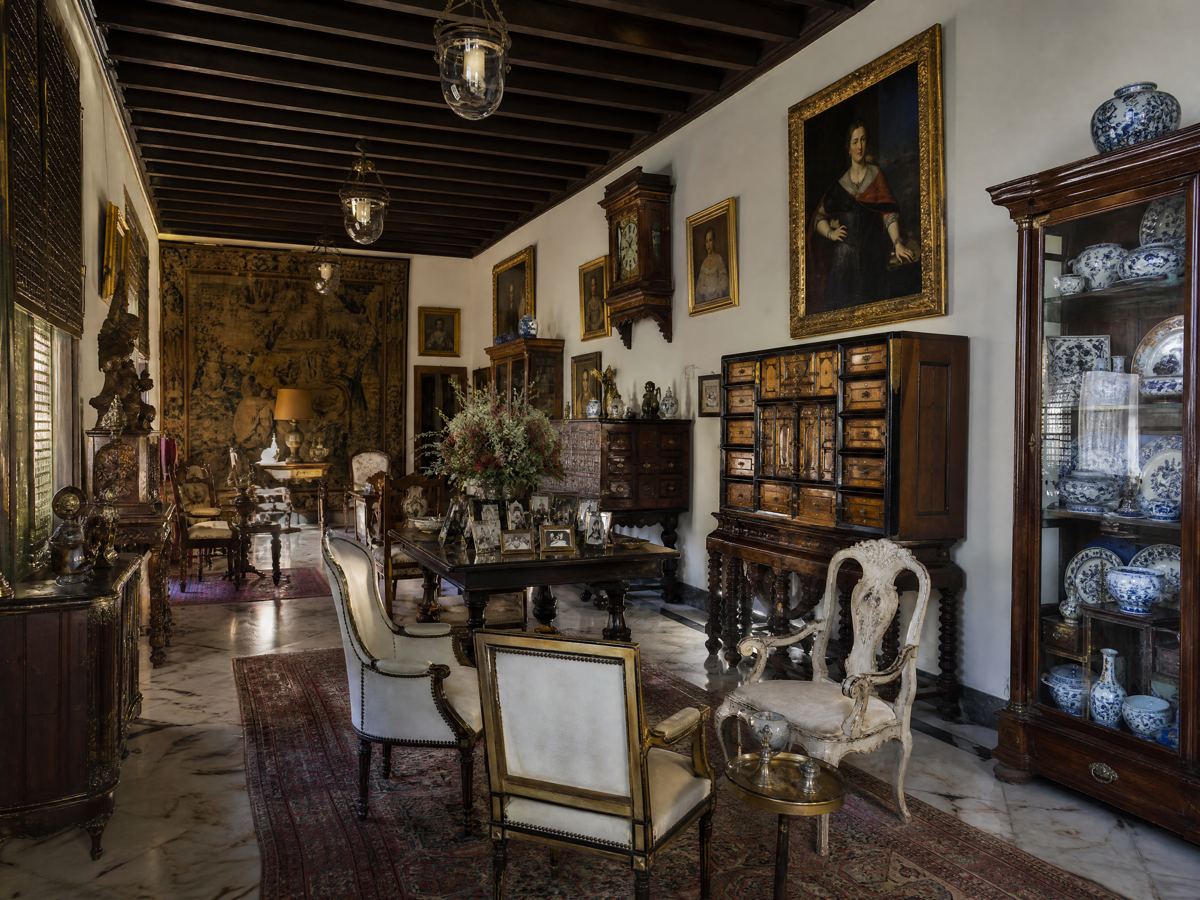
The family's winter rooms, left close to how they lived in them: bargueño cabinets, Chinese porcelain, a private chapel, a library of more than 4,000 volumes, and paintings attributed to Van Dyck and Bruegel. No photos up here.
The palace sells its own entry tickets at the door, so there is no reseller ticket to buy. What you can book online is a private guided tour that covers Lebrija and Casa de Pilatos, plus tickets for the sights that pair well with it.
Prices shown in USD. Free cancellation up to 24 hours before. Powered by GetYourGuide.
| What's Included | General Ticket Best Value€15 adults | Free Friday Pass€0 · Fri 10:00 | Private Palaces TourFrom $245 / group |
|---|---|---|---|
| Ground-floor Roman mosaics | ✓ | ✓ | ✓ |
| Central patio & entrance hall | ✓ | ✓ | ✓ |
| Upper floor (guided rooms) | ✓ | — | ✓ entry fee extra |
| Guide of your own | — | — | ✓ |
| Casa de Pilatos the same morning | — | — | ✓ entry fee extra |
| Hotel pickup | — | — | ✓ |
| Booking | At the door or official site | No booking, arrive by 10:00 | GetYourGuide · free cancellation 24 h |
| Best for | Most visitors | Budget travellers who only want the mosaics | Families and small groups who want two palaces explained |
| Next step | Prices & Hours | Free Friday Rules | Book Private Tour |
Four floors that are worth stopping for. All on the ground floor, all included in the standard ticket and the free Friday pass.
Central patio · 2nd–3rd century
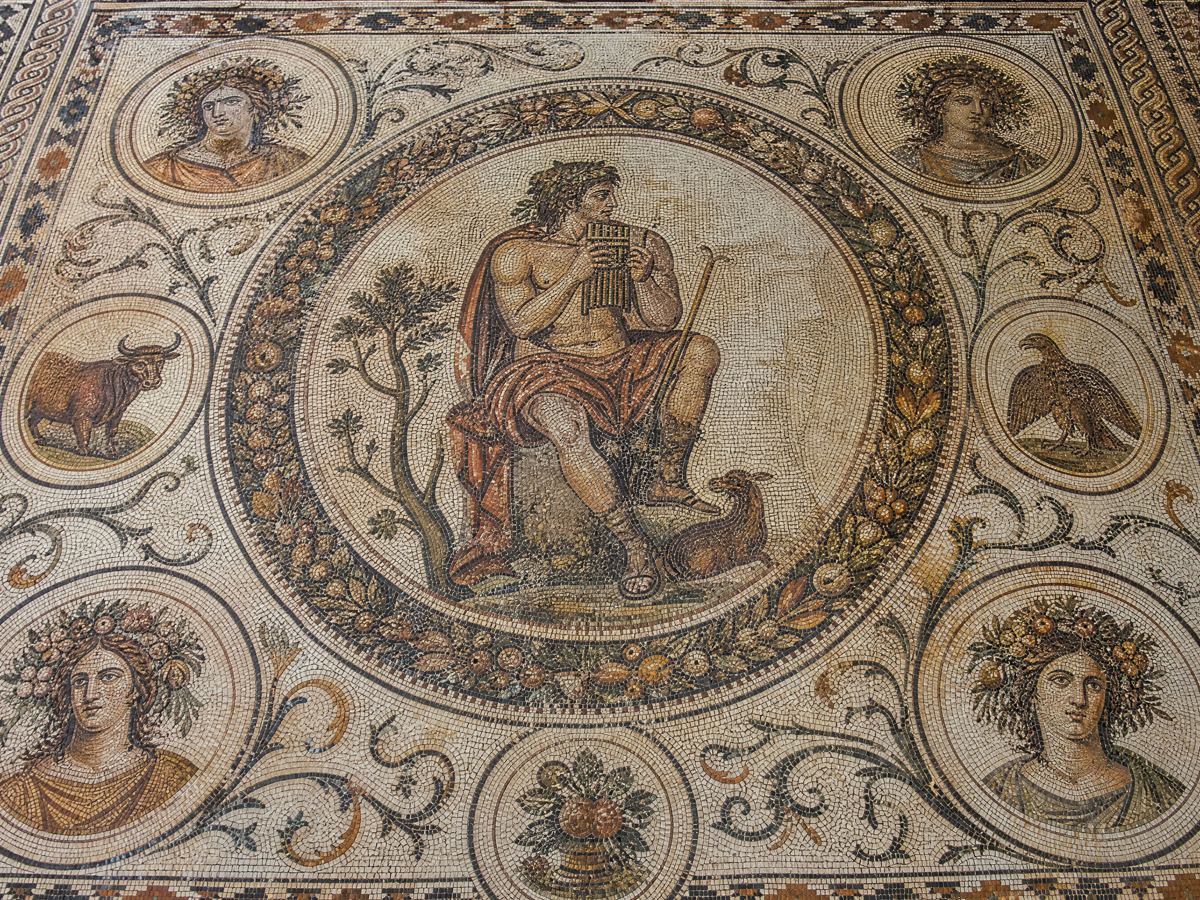
The big one. A central medallion of Pan playing his pipes, in love with the sea-nymph Galatea, ringed by smaller scenes of Zeus's affairs: Europa and the bull, Ganymede and the eagle, Danaë. Busts of the four seasons sit in the corners. The Countess found it on her own land at Los Palacios, above Itálica's amphitheatre.
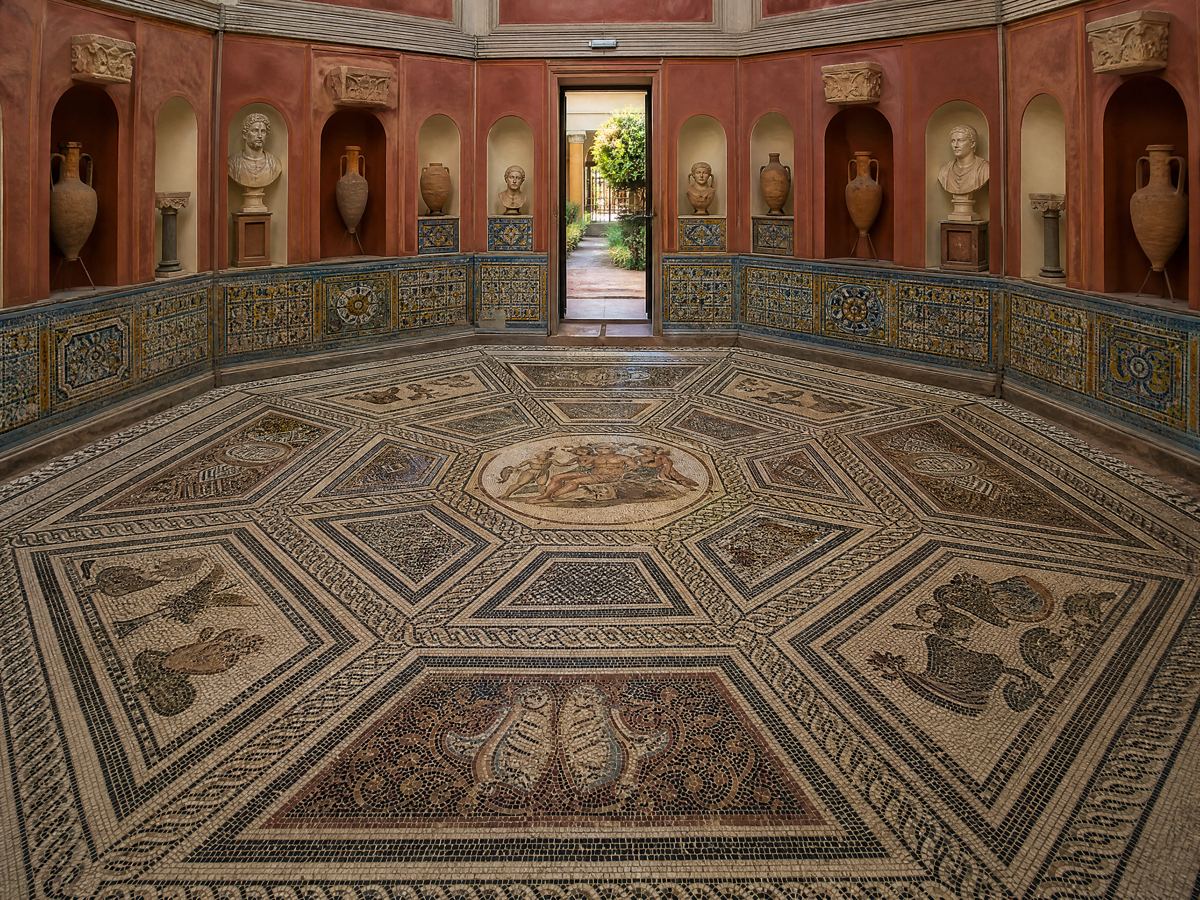
Octagonal Hall
This geometric mosaic, probably from the reign of Hadrian, is said to be the first piece the Countess bought, in 1901, the same year she bought the house. The room was shaped around it and once had a fountain in the centre.
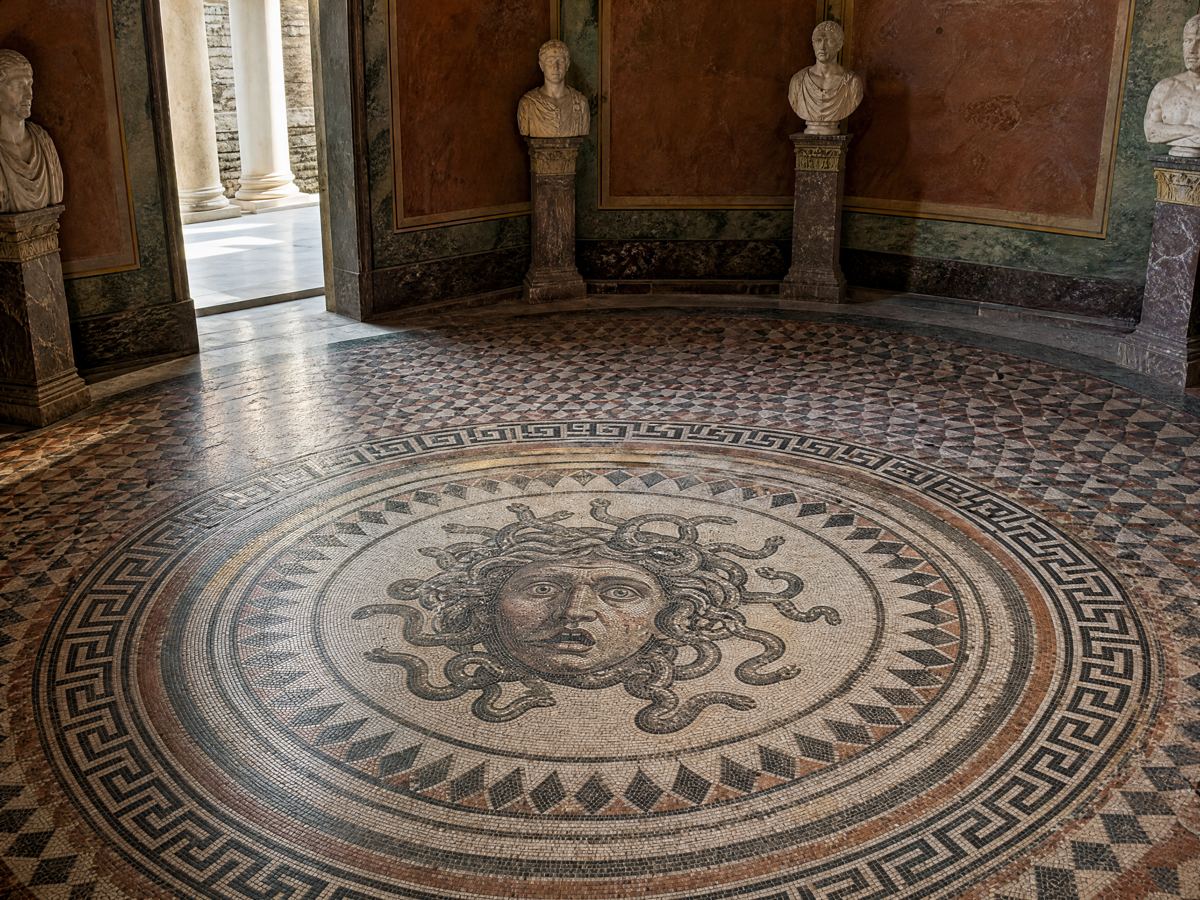
Medusa Room
A small room named after the Gorgon at the centre of its floor. Romans put Medusa on floors and shields to ward off bad luck, and she stares straight up at you. Look at the shading in the snakes: it is done with tesserae a few millimetres wide.
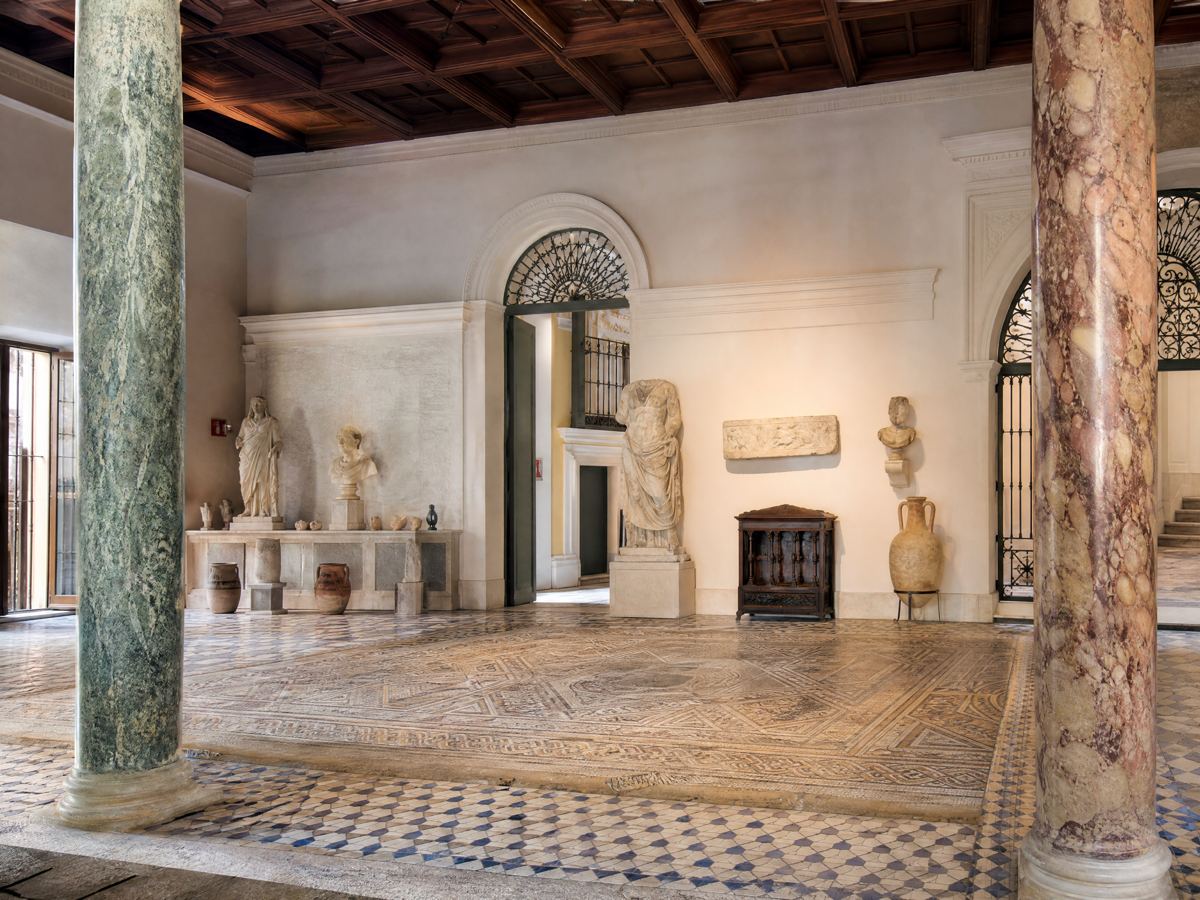
Hall of Columns
The largest room on the ground floor, with two Roman columns, one in green marble and one in multicoloured marble. The mosaic here is framed with tiles and carries the Latin word SALVE, the greeting a Roman visitor would have read at a doorway.
Go at opening time (10:00) or after 16:00 outside summer. Tour groups from the Setas tend to arrive late morning. The patio is brightest around midday, but the mosaics read best in softer light, so early is better for photos.
Every Friday at 10:00 the ground floor is free, no booking needed. Capacity is limited and groups are turned away. The upper floor is not included, so if you want to see it, pay the normal ticket.
Ground floor: 30–45 minutes. Upper-floor guided visit: about 30 minutes, plus any wait for the next departure in your language. Plan on an hour, 90 minutes if you read every label.
Upstairs visits run through the day in English and Spanish. Ask for the next English time when you buy your ticket, then see the ground floor before it. One visitor's advice: arrive 45 minutes before your tour slot.
In July and August the palace closes at 15:00 and the rooms get very warm by early afternoon. The building has thick walls but little modern cooling. Go first thing and do the Setas at sunset instead.
Photos are fine downstairs, so bring a wide lens or use your phone's 0.5x: the patio mosaic is hard to fit in one frame. No photos upstairs. No flash on the mosaics, and stay on the walkways.
"Angela, our guide, showed us two palaces that are totally different but absolutely must-sees. She shared a plethora of details and brought to life the character of the women who owned and created the palaces."
"We LOVED our tour with Margerita! She was incredibly knowledgeable and we learned so much about the history of the houses as well as the city of Seville. She went out of her way to arrange for us to join the upstairs tour."
"It was really good and our guide was EXCEPTIONAL!"
Opening times, the free Friday pass, or how to fit Lebrija into a day with the Alcázar: ask us.
Contact Us →Who built the collection, where the floors came from, and what to look at once you're inside.
Calle Cuna is a shopping street. Chain stores, a bridal boutique, people carrying bags towards the Setas. Halfway down, number 8 has a marble doorway that most of them walk straight past. It is the only clue.
Step into the hallway and the floor changes from modern stone to Roman marble cut into stars and circles. A few metres further, through an iron screen, a patio opens up whose whole floor is one Roman mosaic. It is one of the stranger transitions in Seville, and it takes about four seconds.
Most Seville palaces were built for a family and filled over centuries. This one was the other way round. Regla Manjón Mergelina bought the 16th-century house in 1901 with a clear purpose: she needed somewhere to put the Roman mosaics she was buying and excavating at Itálica.
She spent 13 years on the restoration, with the architect José Sáez y López, cutting rooms to fit floors rather than the reverse. That is why the Octagonal Hall is octagonal.
In most museums, Roman mosaics hang on walls or sit behind barriers. Here they are still floors, in rooms with doors and windows, roughly how a Roman householder would have lived with them. You walk around them on narrow borders.
The palace claims about 580 m² of mosaic in total. A Spanish director of fine arts, the Marqués de Lozoya, called it the best-paved palace in Europe, and the palace has quoted him ever since.
The patio mosaic rewards a slow walk round. In the centre, Pan plays his flute for Galatea. Around him, eight medallions tell Zeus's seductions: as a bull with Europa, as an eagle with Ganymede, as golden rain with Danaë. In the corners, four busts stand for the seasons: bare branches for winter, flowers, wheat, grapes.
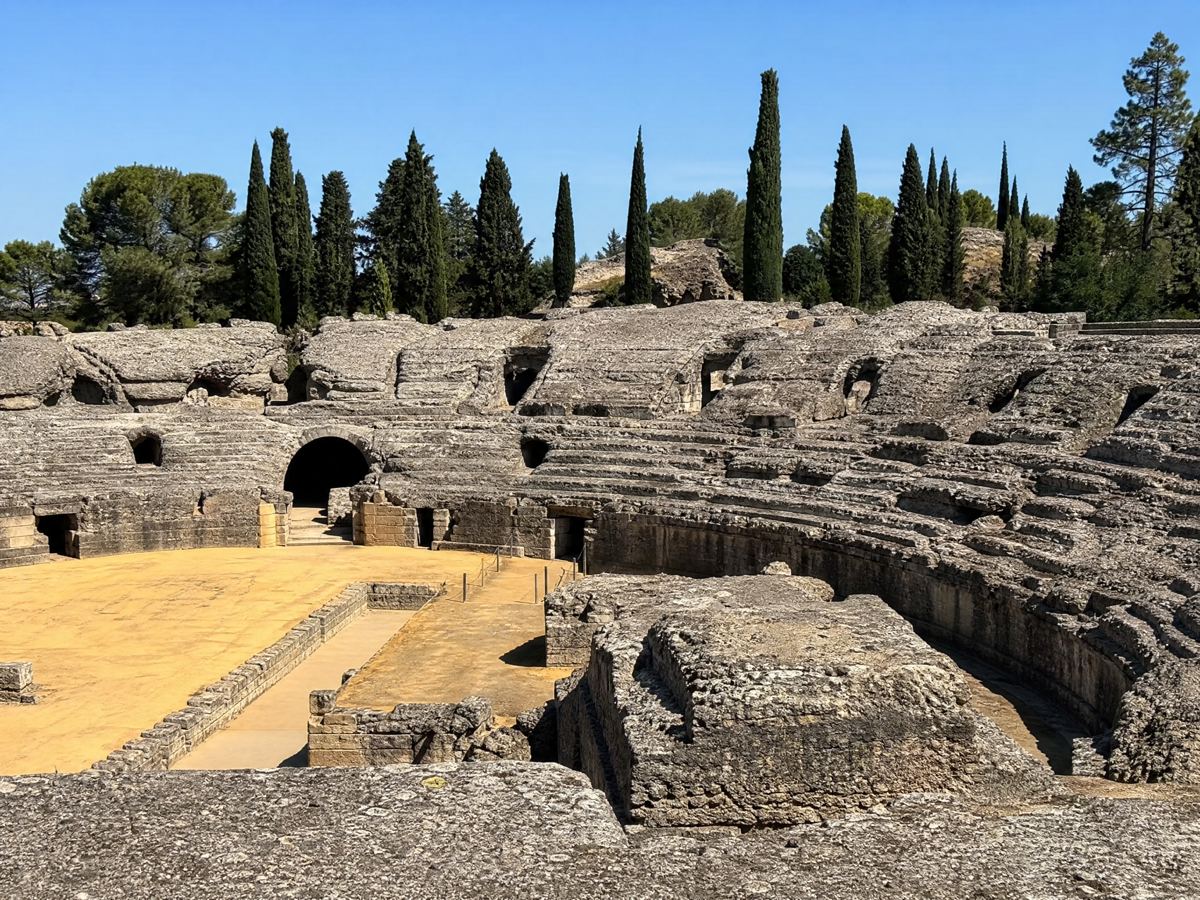
It came from an olive grove called Los Palacios, above Itálica's amphitheatre, on land the Countess owned.
The Countess collected buildings as well as objects. The tile dados in the dining room are 16th-century Sevillian work taken from the Convent of San Agustín after the 19th-century church confiscations. The coffered ceiling came from a palace in Marchena, 60 km east.
So the house is partly a 16th-century mansion and partly an anthology of other Andalusian buildings. Nobody pretends otherwise, which is part of the charm.
Upstairs was the winter residence, and the family kept it furnished. The guided visit lasts about half an hour and takes in the drawing rooms, the dining room, the chapel, and a library of more than 4,000 volumes. Paintings attributed to Van Dyck and Bruegel the Elder hang next to works from the school of Murillo.
Opinions differ: some visitors say it is the best part, others find it a lot of furniture. It is included in the ticket, so go.
Regla Manjón (1851–1938) was a poet, an amateur archaeologist, and the first woman elected to Seville's Royal Academy of Fine Arts of Santa Isabel de Hungría. From 1922 she sat on the provincial Commission of Historic and Artistic Monuments.
She also bought pieces that farmers at Itálica were digging up and selling, or breaking. Whether that makes her a rescuer or a collector depends on who you ask; the guides upstairs are happy to discuss it.
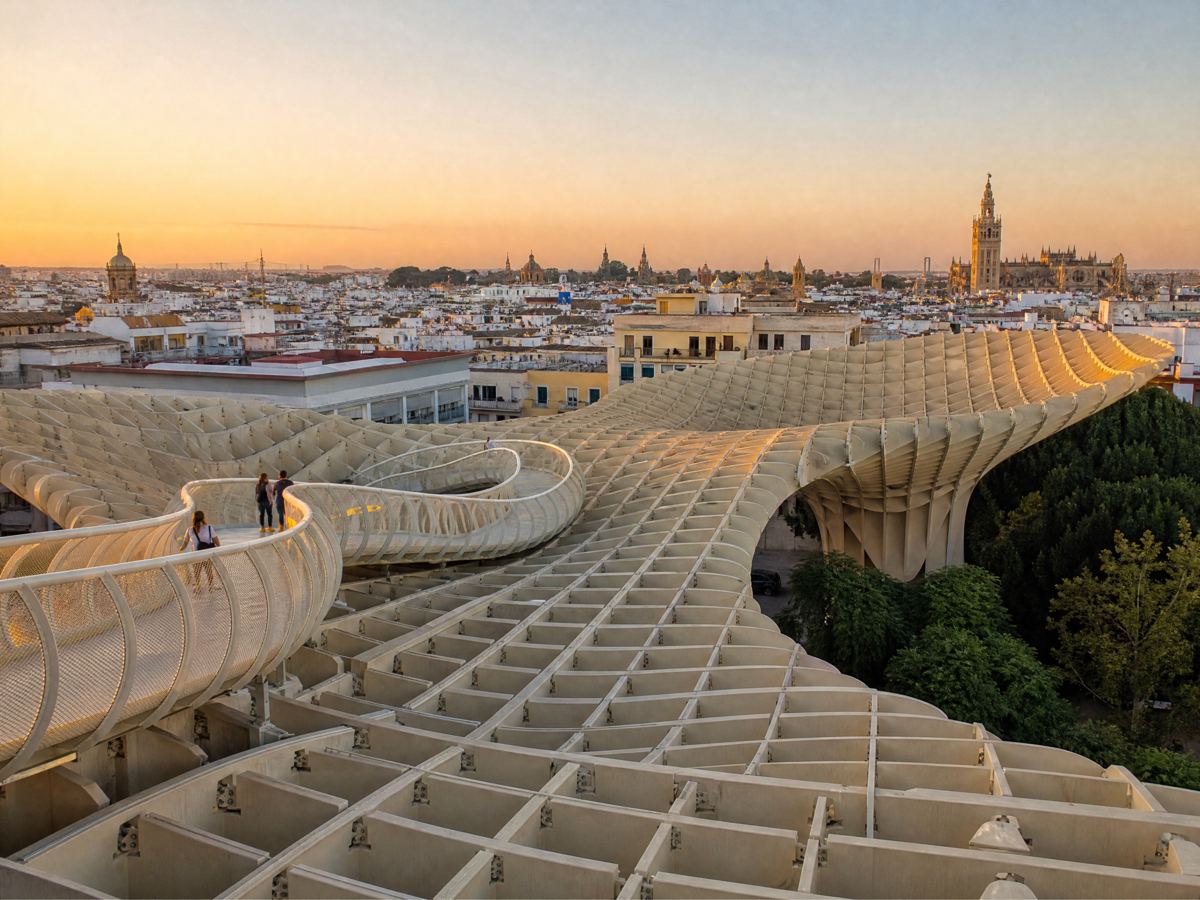
The palace is a three-minute walk from the Setas de Sevilla, where the Antiquarium shows the Roman streets found under Plaza de la Encarnación. Do both and you get Roman Seville under glass and Roman Seville underfoot within 300 metres.
Casa de Pilatos and Las Dueñas are each about ten minutes away on foot. Three private palaces in a day is easy here.
Buy your ticket, note the next English upstairs time, then do the mosaics. If the tour is in 15 minutes, start with the patio and the Hall of Columns and leave the small rooms for after.
Be on Calle Cuna by 9:45. The free pass is for the ground floor only and capacity is limited. It is a good deal if you mainly want the mosaics; if you want upstairs, pay the €15.
Walk up to Plaza de la Encarnación for the Setas, or down to Plaza del Salvador for a drink on the church steps. Calle Sierpes and Calle Cuna are Seville's main shopping streets, so it gets busy after 11:00.
Pilatos is bigger and greener; Lebrija is about the floors. If Roman art is your thing, Lebrija first. If you want gardens and tiles, Pilatos. With a morning free, do both.
Check prices and hours, or book the private tour that covers Lebrija and Casa de Pilatos with free cancellation.